AI Workflow Automation & Agentic Systems Engineer
Design and deploy production-grade AI workflow automation, autonomous agent pipelines, and custom API orchestrators with deterministic gating.
Core Capabilities
Related Case Studies
DevFix 🛠️
The dreaded "It works on my machine" syndrome. When a developer clones a repository and the build fails due to missing dependencies, cryptic errors, or lockfile mismatches, they spend hours Googling stack traces.
Existing AI tools like Copilot fail here because they rely purely on text generation, guessing the fix without proving it works. Giving an AI access to run arbitrary bash commands on your host laptop to test its fix is incredibly dangerous.
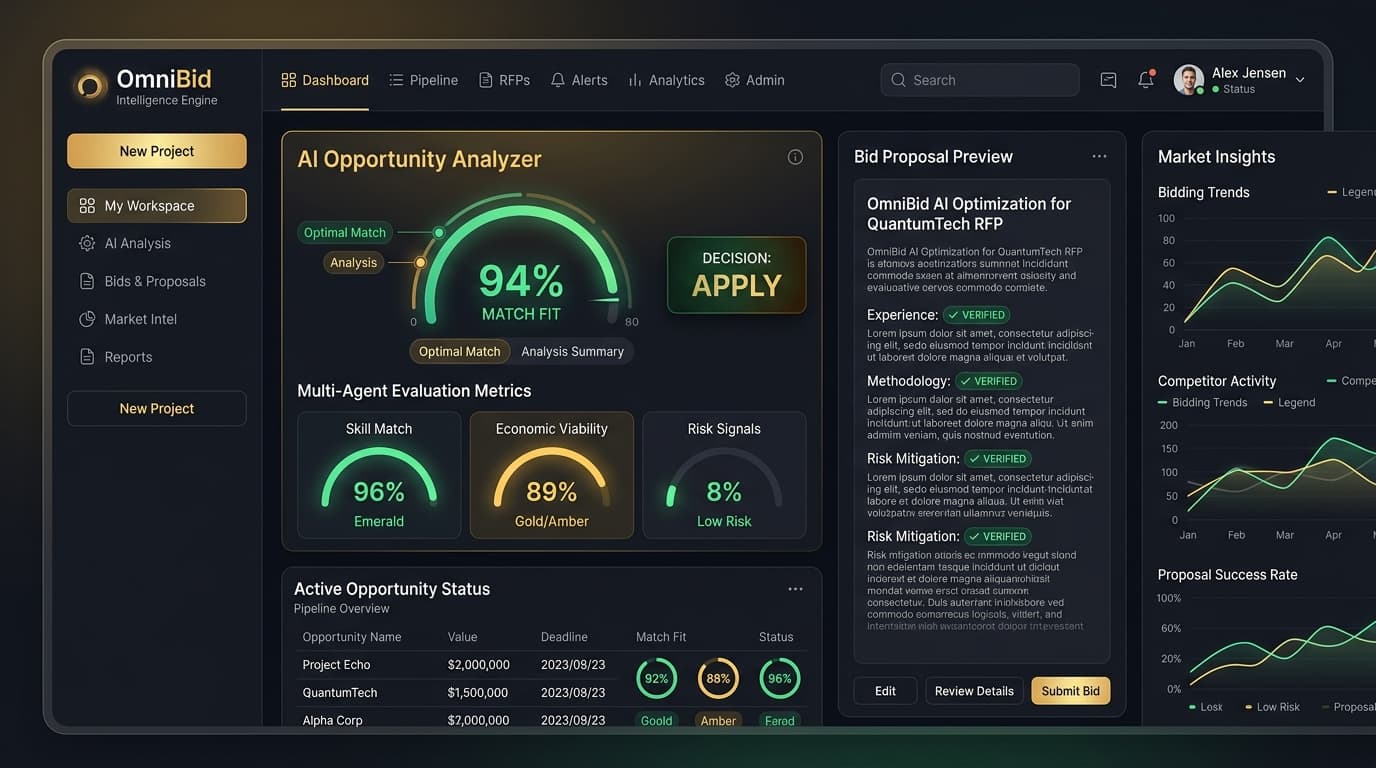
OmniBid Intelligence Engine
Finding good freelance jobs on platforms like Upwork is exhausting. Many jobs are scams, have insulting budgets, or use legacy technologies. Applying to them wastes hours of time and real money (Connects).
Standard AI models are prone to hallucination—if a client posts a job without a budget, standard LLMs will confidently guess or invent details instead of flagging missing data.
Frequently Asked Questions
How do you prevent automated AI workflows from hallucinating or making errors?
I employ deterministic guardrails where code strictly enforces boundaries before and after model invocation. AI is used solely for reasoning, while hardcoded schemas and validation layers ensure 100% predictable execution.
What platforms and tools do you use for AI automation?
Depending on your needs, I architect custom Node.js/TypeScript and Python event-driven pipelines, utilize LangChain/LlamaIndex, integrate Model Context Protocol (MCP), or build Docker-sandboxed execution agents.
Can you automate complex multi-step developer workflows?
Yes. For example, in DevFix I built an autonomous agent that catches broken build errors, spins up an isolated Docker container, writes code patches, and verifies compilation before committing changes.
How do you handle API cost control and rate limiting?
I implement deterministic pre-filtering (dropping invalid jobs or spam before the LLM is invoked), semantic response caching, token usage monitoring, and automatic fallback routing to cost-efficient smaller models.